Love is a magnificent feeling, celebrated by poets, artists, and musicians. It inspires us, lifts our spirits, and gives us a sense of fulfillment.
It is only natural for each of us to want to love and be loved.
However, if your idea of love is based on the belief, “I can’t be truly happy or fulfilled without a partner. I need to be loved to be happy,” this is already a sign of dependency.
What does it mean to be dependent on love?
It means love has become a pathological need—something you feel you cannot be happy without.
You suffer from a perceived lack of love and expect someone else to fill that void. You are convinced that your life will only become better, more interesting, and more meaningful once a partner arrives to make you feel needed, significant, and whole.
This kind of dependency is an unhelpful state that undermines your personality, your self-esteem, and your ability to build healthy relationships.
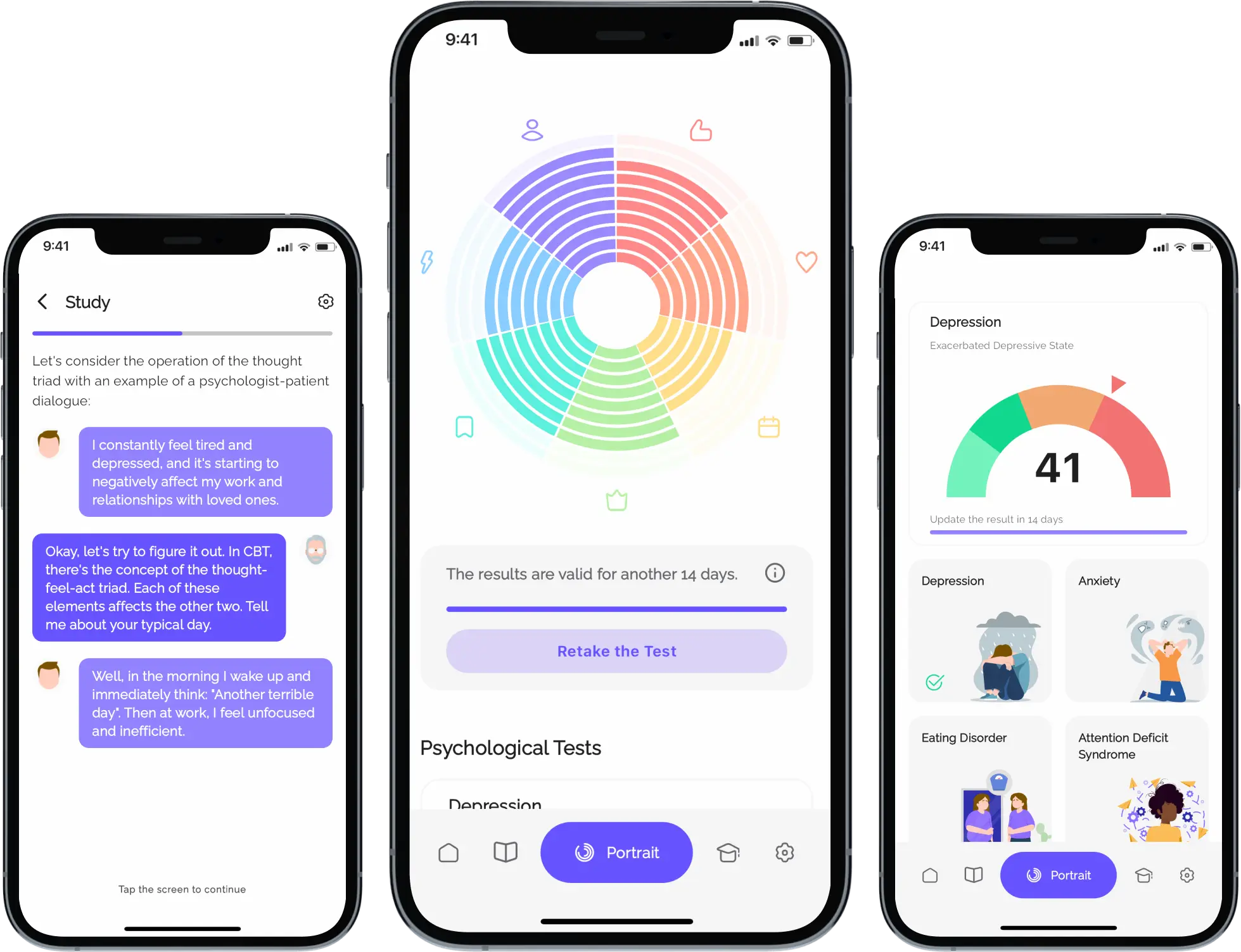
More content in our app
You're only seeing a portion of the content. In the app, you'll find numerous interactive articles. Additionally, there are psychological tests to track your mood dynamics, a daily planner, an automatic thought journal, and much more!






The causes of love dependency vary, but they often have roots in childhood or adolescence.
People with low self-esteem are particularly vulnerable—those who fear loneliness, focus on their flaws, and doubt their own strength and abilities.
Low self-esteem stemming from childhood is often experienced as a sense of inadequacy.
When parents provide little attention and a child lacks parental love, that person may seek those feelings in partners during adulthood, forming dependent relationships.
Take the example of Victoria, 28, who spends her evenings and weekends in despair because she believes: “I can only be happy in a relationship. Without a man, I am nothing.”
For her, being loved is as essential as breathing. This level of neediness often pushes people away.
While analyzing her beliefs, Victoria wrote down the downsides and benefits of her way of thinking.
The downsides were:

Then, she wrote down the benefits of this belief:
How real are these benefits?
For years, Victoria believed she couldn’t live without a man, yet this very belief hasn’t helped her find the partner she desires.

“True happiness lies in being content with oneself.”
Seneca
Victoria realized she was placing too much importance on men, which actually prevented her from attracting them.
She also realized that dependent people often come across as too demanding, which makes building relationships harder.
She saw that people who find happiness within themselves are often more attractive to others because they radiate joy and confidence.
Love dependency hinders healthy relationships. By expressing a need for another person to achieve your own happiness, you are subconsciously communicating: “Love me, because I am nothing on my own.” Such relationships are unlikely to be healthy.
Even if you are in a relationship, holding these beliefs makes it unlikely to be a healthy one. You end up relying entirely on a specific person—whom you subconsciously view as the source of your happiness—to be by your side.
And you may be willing to do anything. When you don’t get the “dose” of emotion and feeling you need, you might pressure your partner to feel loved, or start fantasizing about finding that “perfect love” elsewhere.
You will always feel like something is missing or “not quite right,” because you have placed the responsibility for your well-being on someone else.
It’s incredibly important to learn how to regulate your mood and find happiness within yourself. This will allow you to feel just as alive when you’re alone as when you’re with a loved one.
But you might think, “That sounds great, but it doesn’t feel realistic. Being alone means being an emotional failure.”
Many believe that love is what drives the world. You see it in commercials, hear it in pop songs, and read it in poetry. But in reality, love is far from the only path to a happy and fulfilling life.
Being alone is not the same as being unhappy. Most of life’s pleasures can be enjoyed on your own.
For example, when you listen to your favorite music, dance, walk through beautiful places, read a book, or eat ice cream. You don’t need company to experience joy.
Self-love is the beginning of a lifelong romance.
Oscar Wilde
The number of pleasures you can enjoy alone is endless. This means you have access to many sources of joy, regardless of whether someone is by your side.
Think about it—what is your list of pleasures? What can you do to treat yourself?
Sometimes we strive so hard for the perfect relationship and the idea of a grand romance that we lose sight of what we actually need to experience true love.